
FACHBEITRAG · ELEKTROTECHNIK, AUTOMATION & IIoTTECHNICAL INSIGHT
Zustandsüberwachung: Sensorwerte richtig einordnenCondition monitoring: putting sensor readings in context
Fachbeitrag · Redaktioneller Stand: 28.10.2026 / Editorial review: 28 October 2026
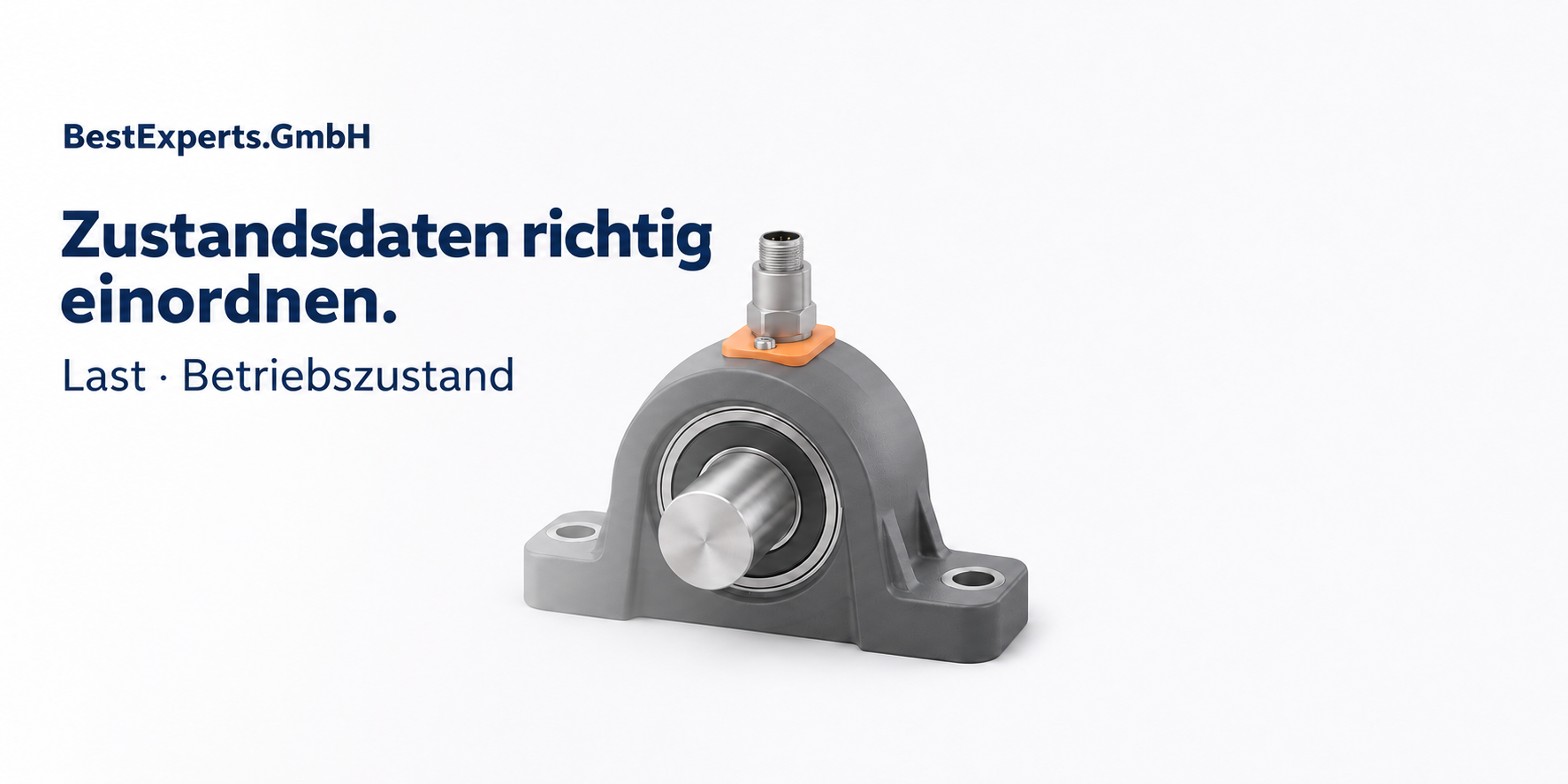
Die Temperatur am Lager eines Antriebs steigt. Gleichzeitig laufen mehr Aufträge und die Halle ist wärmer. Bevor die Instandhaltung Verschleiß vermutet, vergleicht sie Messwerte bei ähnlicher Last, Drehzahl und Umgebungstemperatur.
Legen Sie zuerst fest, welche Veränderung auffallen soll und welche Entscheidung darauf folgt. Wählen Sie dafür Messgröße, Messstelle und Abtastrate. Trennen Sie beim Auswerten Anlauf, normalen Betrieb und Stillstand, wenn sie die Messwerte unterschiedlich beeinflussen.
Vereinbaren Sie, wer einen Alarm prüft und welche Angaben dabei gebraucht werden. Ein Trend ist ein Anlass zur Untersuchung. Wer die verbleibende Lebensdauer vorhersagen will, braucht ein dafür geprüftes Modell und geeignete Betriebs- und Ausfalldaten.
ISO 17359 zur Zustandsüberwachung
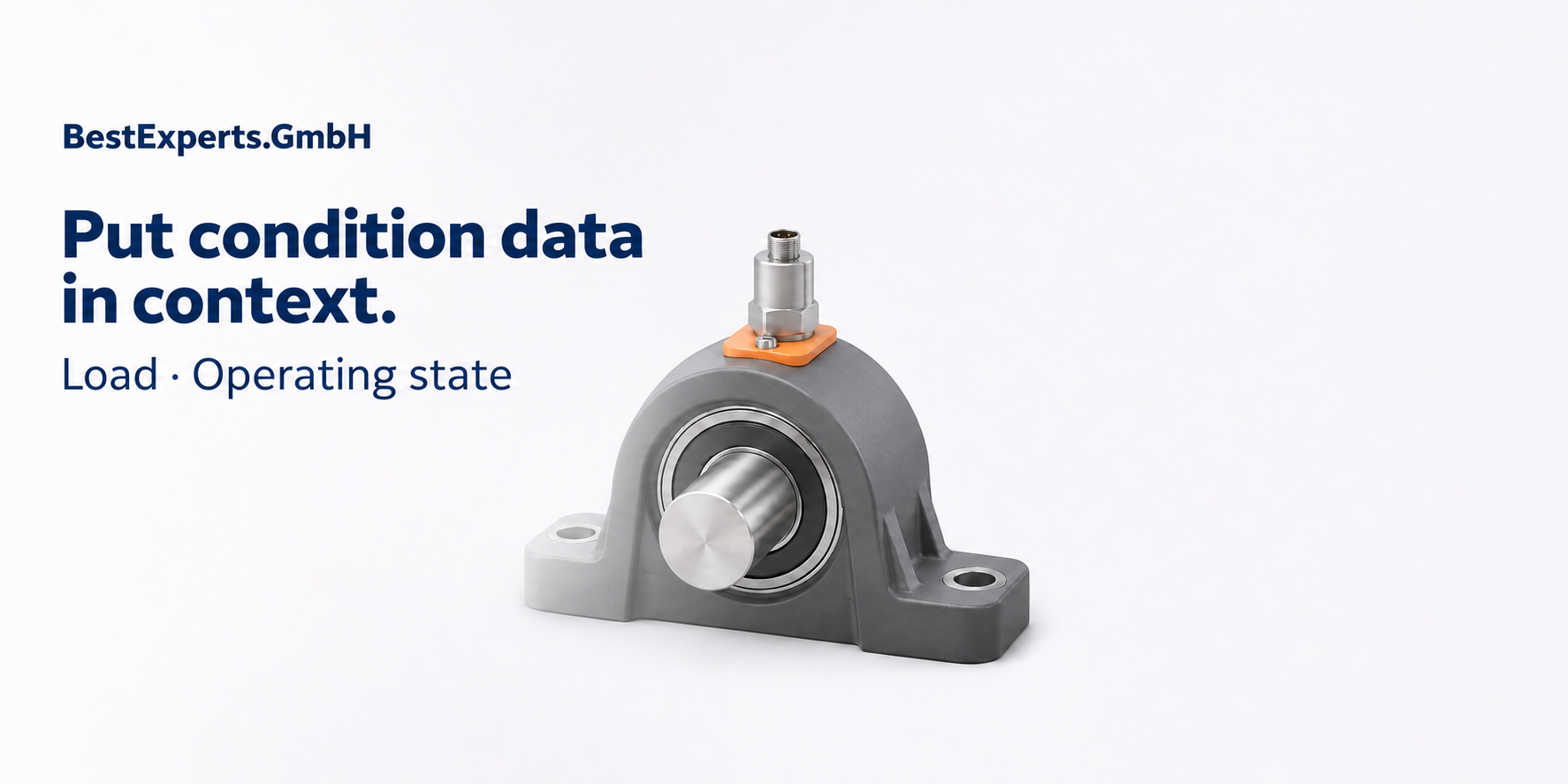
A drive bearing runs hotter. The line is handling more work and the air in the plant is warmer as well. Before attributing the change to wear, compare readings at similar load, speed and ambient temperature.
Decide which change you need to detect and what decision it should trigger. Choose the measurement, sensor location and sampling rate accordingly. Separate start-up, steady operation and standstill when they affect the readings differently.
Agree who checks an alert and what information they need. A trend is a reason to investigate. Predicting remaining life takes a model validated for that purpose and relevant operating and failure data.
ISO 17359 on condition monitoring